The Road Tennis Built: The Honorable Derek White
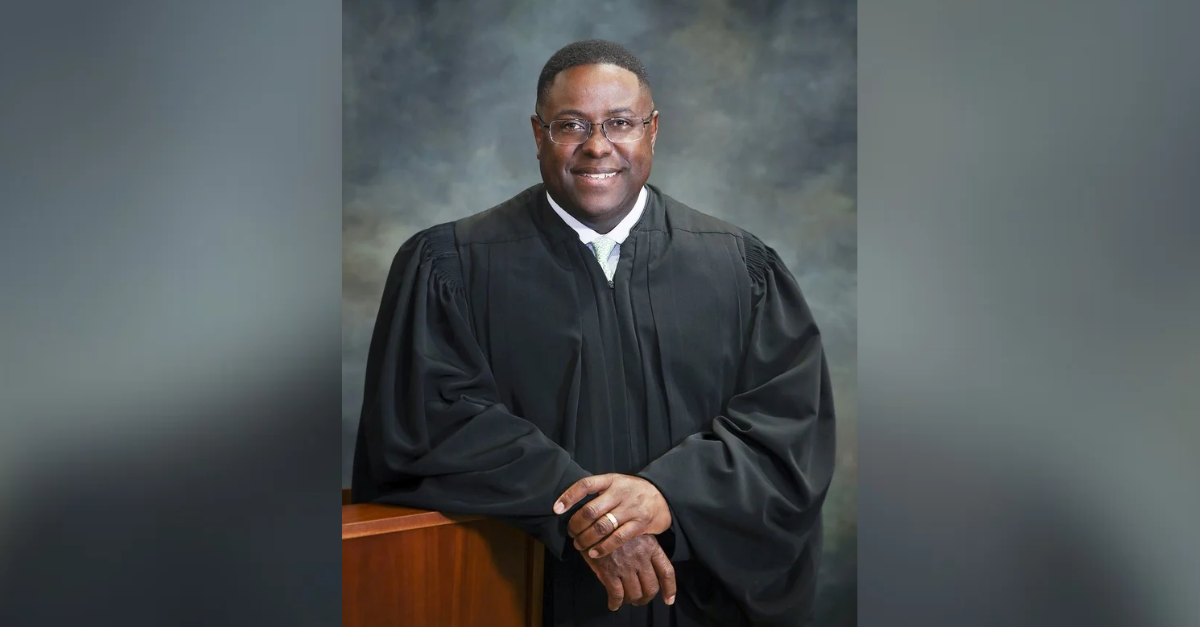
The first time The Honorable Derek White, ’90, picked up a tennis racket, he had no idea the sport would become one of the most important forces in his life. He had been watching John McEnroe at Wimbledon when McEnroe delivered his now-famous protest to the chair umpire: “You can’t be serious.”
White was intrigued enough to head outside and challenge a fellow high school baseball teammate to a game of tennis.
“He beat me 6-0, 6-0,” White recalls.
The loss could have ended his brief experiment with tennis. Instead, it sparked something else.
“My determination to get better became my love of the game!”
More than four decades later, that determination has taken White from a beginner on a high school court to the leadership of one of the largest organizations in American tennis. In 2027, the Liberty County native will be inducted into the Southern Tennis Hall of Fame, joining players, coaches and leaders recognized for their contributions to tennis in the United States Tennis Association (USTA) Southern section. For White, the honor is a reflection not simply of how long he has been involved in tennis, but of what the sport has given him and what he has spent much of his life trying to give back.
“I was fortunate to meet Jim ‘Hawk’ Hawkins,” White said. Hawkins, who had played on the professional tour before entering the military, became White’s coach.
Under Hawkins’ guidance, White began competing seriously. He eventually reached No. 41 in singles in the Southeast and, with his doubles partner, climbed to No. 2. Hawkins taught him much more than how to hit a tennis ball.
“He taught me perseverance, ethics and hard work,” White said.
Those lessons would prove useful far beyond the tennis court. After two back surgeries ended his playing days, White found another way to remain part of the sport. Rather than stepping away, he turned his attention toward coaching, volunteering and expanding access to tennis.
“I no longer play,” he said. “My joy now is volunteering with the USTA and exposing tennis to as many people as possible.”
That commitment eventually led White into leadership at virtually every level of the United States Tennis Association. He began volunteering while attending Mercer Law School, serving as president of the Macon Tennis Association. Over more than 25 years, he would serve at the district, sectional and national levels, ultimately becoming the first Black president and CEO of the USTA Southern section.
But the titles tell only part of the story. White’s connection to tennis is deeply personal. He describes the sport as something that helped guide him during difficult periods of his life and introduced him to people and experiences he might otherwise never have encountered.
“When I came to the crossroads in my life, tennis was the vehicle that helped me stay on the right road, though oftentimes bumpy and tumultuous,” he said. “Through my travels on that road, it was tennis that exposed me to what this world truly had to offer, wonderful people.”
That realization changed the way he thought about the sport. He became a certified teaching coach so he could offer others the same opportunity tennis had given him.
“Everybody has storms in their life, and we are all affected by the storms differently,” White said. “But what is consistent for all of us is that we all need something to assist us through our storms. Mine was tennis.”
For White, sharing the sport has become almost a responsibility.
“Having personally experienced the soul-shaping powers of tennis, I knew I had to spend the rest of my life sharing tennis with the masses.”
There are obvious parallels between tennis and the law, particularly for someone whose career has been built around trial work. White earned his undergraduate degree in psychology and philosophy from Georgia Southern University before coming to Mercer Law School, where he served as Student Bar Association president in 1994. After graduation, he worked for three law firms before establishing The White Law Group in Pooler in 2001. His practice has included nursing home litigation, wrongful death, medical malpractice, tractor-trailer collisions, contracts, trial practice, wills and mediation.
Today, White serves as a Chatham County State Court judge. The transition from courtroom to tennis court, or vice versa, is not as much of a stretch as it might seem.
“Most definitely there are traits from tennis that translate into the legal profession,” White said. Discipline, competitiveness, presence and problem-solving all play a role.
On the tennis court, a player is alone in an environment that can change from point to point. A good strategy at the beginning of a match may not work later.
“On the court, you are by yourself in an ever-changing environment to which you must adapt,” he said. “Trial work is no different.”
A lawyer can prepare extensively, he said, but trials inevitably bring the unexpected.
“You must be able to reassess, pivot, strategize and continue confidently with a new plan.”
That ability to adjust has served White throughout a career that has moved between private practice, judicial service and professional leadership. While White’s own competitive career ended with his back surgeries, his involvement with tennis expanded.
He has taught players of all ages, from children to adults, through private lessons, public programs, military installation clinics, adult leagues and high-performance clinics for ranked junior players. He also taught summer camps at West Point Military Academy.
His community work has given him another avenue to introduce young people to the sport. Through organizations such as First Tee of Savannah and Boys & Girls Clubs, White has worked to connect children with opportunities to learn and grow through athletics.
What lessons does he hope they take with them?
“Integrity, self-awareness, self-worth, independence and problem-solving agility,” he said.
That philosophy reflects his broader belief that tennis is about considerably more than competition. White has spent years helping shape the sport through USTA service, including national committees addressing rules, governance, nominations and funding. He has received the USTA Southern Charles B. Morris Jr. Service Award and the 2025 USTA Southern Jacobs Bowl.
Yet his involvement has never been limited to tennis. His civic and professional service has included work with organizations ranging from the United Way of the Coastal Empire and Georgia Bar Foundation to the American Red Cross and local youth and historic preservation organizations. For White, those commitments seem to share a common thread: creating opportunities for people to find their footing, develop confidence and contribute to something larger than themselves.