From Classroom to Courtroom: Mercer Law’s Partnership Inspires the Next Generation
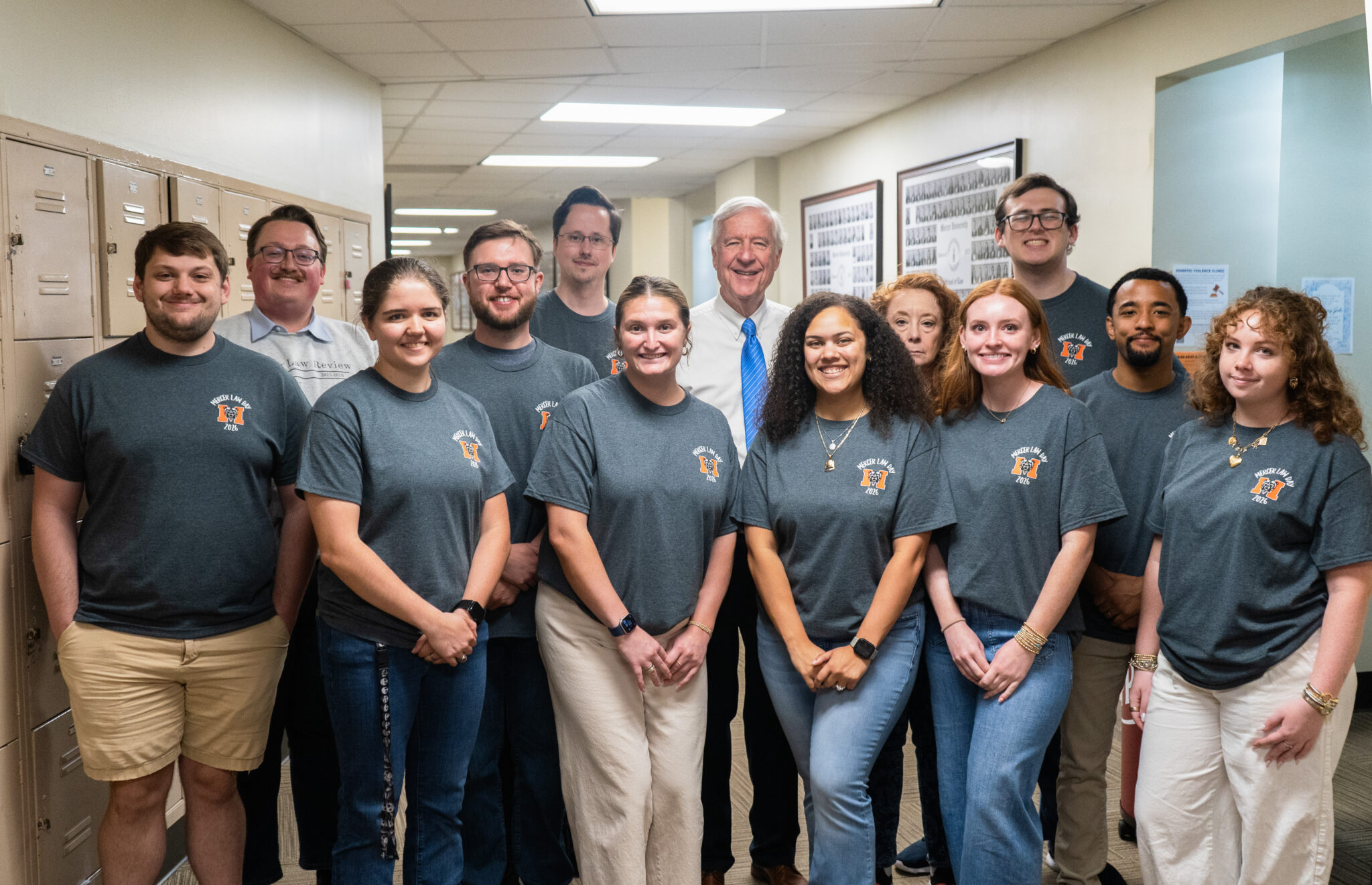
 On Friday, April 17, the hallways of Mercer University School of Law were filled with a different kind of energy—not the quiet intensity of exam season, but the curiosity of discovery. The Law School’s Civics Field Placement (CFP) program welcomed students from Macon’s Southwest Magnet High School and Law Academy and Rutland High School for a day designed to bring the law to life—and, perhaps, to shape futures in the process.
The event served as a timely reflection of Law Day, observed nationally each year on May 1. Established in 1958 by President Dwight D. Eisenhower, Law Day was created to underscore the nation’s commitment to the rule of law at the height of the Cold War, offering a clear contrast to systems governed by force. In the decades since, every U.S. president has continued the tradition, with bar associations, courts, and schools across the country hosting programs throughout the month of May.
The 2026 Law Day theme, “The Rule of Law and the American Dream,” underscores a principle both simple and profound: that no person stands above the law. It is this foundation that protects individual freedoms and creates the conditions for opportunity—allowing people not only to live freely, but to pursue their ambitions.
At Mercer Law, that principle is not just discussed; it is learned and shared. Through the Civics Field Placement program, a cohort of law students takes on the dual role of student and teacher. Enrollment is intentionally limited, ensuring a focused, immersive experience. Over two semesters, participants first learn how to teach, then step into classrooms to put it in practice.
“Our primary goal is civics education, which I believe dovetails with the rule of law. But it’s not overt—it’s just kind of what CFP is about organically: bridging the gap between theory and practice,” said Associate Dean of Strategic Initiatives and Professor of Law Suzianne Painter-Thorne.
The visit was more than a field trip. It was an extension of a yearslong partnership between Mercer Law and high schools where legal education is introduced early and intentionally.
The origins of the Civics Field Placement program reflect a broader concern about civic understanding—one that Senior United States District Judge Richard Story has seen firsthand. “We’re facing a real civic deficit,” Judge Story told students, pointing to research indicating that a significant majority of Americans would struggle to pass a basic civics exam. “Our government is designed to fix what is wrong—to help people—but too many don’t understand how it works or what their role is within it.” That realization led to the creation of CFP three years ago, with a mission not only to educate students, but to engage families and communities as well. By introducing high school students—many nearing voting age—to the practical workings of government, the program aims to empower participation and responsibility. “We have to actively sustain the dream of American democracy,” Story said. “These students get it. We want them—and their parents—to get out and vote, to be involved, and to make a difference in their communities.”
“Many of the high school students will be first-generation college students, and I like to think that is one way to assist them toward achieving their goals,” said Painter-Thorne.
 To begin the Law Day visit, Story spoke to the group of high schoolers and answered their questions. The students broke into groups to attend a mock class in criminal law taught by Professor Heather Baxter and closing arguments where students acted as a jury and Judge Story sat as judge. After lunch, the day concluded with a panel discussion focused on undergraduate and law school life. The panel featured current law students alongside undergraduate admissions and financial aid representatives.
In Civics Field Placement I, students study the constitutional concepts most relevant to high school audiences while also gaining an understanding of adolescent development—cognitive, psychological, and social. They learn how to design lesson plans that are not only informative but engaging. By the second semester, in Civics Field Placement II, they bring those lessons directly to the Law Academy, translating complex legal ideas into accessible, interactive instruction.
The program is led by Professor Painter-Thorne, who designed the program along with Associate Dean for Academic Affairs Pamela Wilkins. Under her guidance, Mercer Law students work closely with academy teachers, building a collaborative model that benefits both groups of students.
For the high school students, the impact is immediate. They gain exposure to the broader legal system, deepen their understanding of the Bill of Rights and the branches of government, and refine practical skills—from crime scene analysis to courtroom advocacy through mock trial. Just as importantly, they encounter mentors who are only a few years ahead of them, making the path to law school feel tangible.
For the law students, the experience offers something equally valuable: perspective. Teaching requires clarity, patience, and empathy. It challenges them to think not just about what the law is, but how it is understood—and why it matters.
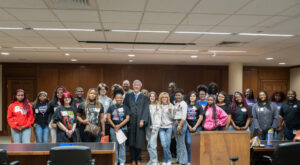 “Our partnership with Southwest Magnet High School and Law Academy, Rutland High School, and Northeast High School reflects Mercer Law’s deep commitment to expanding access to legal education and strengthening civic understanding,” said Dean Karen J. Sneddon. “By connecting students with real-world experiences and mentors, we are not only demystifying the law—we are helping to build a more informed, engaged, and inclusive next generation of leaders.”
At its core, the Civics Field Placement program reflects a broader truth about legal education: it does not exist in isolation. The law is not only something to be studied, but something to be shared. Civic engagement—whether in a classroom, a courtroom, or a community—plays a vital role in shaping informed, capable citizens. It deepens understanding of current issues, strengthens academic performance, and supports social and emotional growth.