From Courtroom to Characters: The Many Lives of Susan Yandle Middleton
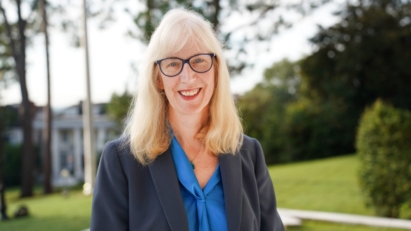
Susan Yandle Middleton, ’81, has built a life richer and more varied than she ever expected when she first set out on her professional path. An author, attorney, educator, musician, and longtime public servant, Middleton’s professional life has carried her from the classroom to the courtroom and now to the written page as a published novelist. At the center of her remarkable journey is a decision she made decades ago — to walk through the doors of Mercer Law School and embrace the challenges ahead.
In 1975, Middleton moved back home to Macon from New Haven with her eighteen-month-old daughter. Her six-year marriage had ended, and at 28 she found herself adrift. “I floundered for a while,” she recalls.
She began leading music and teaching Sunday school at the Church of the Exceptional, a ministry founded by a United Methodist minister serving mentally and physically handicapped young adults. There, surrounded by individuals whose visible challenges far exceeded her own, she began to reassess her life. Her return to church became a turning point to getting her life on track.
“I had to do something,” she says. “I was doing very little with the brain God had given me. I needed to find something that would push me beyond the artificial limits I had placed on myself. So, I decided to do the impossible—go to law school.”
Law school, she says, was unlike any academic experience she had as an undergraduate at Georgia State University, where she graduated in 1970 with a dual degree in English and language arts teacher education.
“The first big shock of law school was learning that there would be only one exam at the end of the course. There were no tests, quizzes, or papers along the way — nothing to gauge how I was doing until the very end.”
Her study group — “pals who inhabited the bunker with me” — became a steady source of support as they worked through dense casebooks and adjusted to the pace of classroom discussion.
Somewhere between that first shock and graduation three years later, something fundamental shifted.
“I finished law school with a brain on fire, the analytical part fully functioning.”
Middleton says law school trained her to think with rigor and precision. It sharpened her ability to dissect arguments, anticipate counterpoints, and remain steady under stress — lessons that would define her years as a trial lawyer in the early 1980s.
Her Bar license became what she describes as “a passport” into jails, gritty neighborhoods, and courtrooms far removed from her own upbringing. There, she began to observe human nature with the attentiveness that would later fuel her fiction.
“In the courtroom, to watch fully, you must watch with heart and head,” she says. “Every gesture, every facial expression, every word, every sigh has meaning.”
After ten years of practice, much of it in juvenile court representing teenagers before the establishment of a public defender’s office in Bibb County, Middleton felt another calling.
“I saw those teenagers as having so much potential. I thought that maybe if I could meet them in a classroom rather than in a courtroom, I could be of more help.”
She turned to teaching language arts and social studies, eventually becoming coordinator of the International Baccalaureate program for Bibb County Public Schools and earning Teacher of the Year honors in 1993. She later served twelve years on the Bibb County Board of Education.
Yet even as she transitioned back into education, law school never left her.
“In court, facts alone are never enough. You must shape them into a narrative that resonates — with judges, with juries, with clients. The discipline of listening — deeply, carefully — is central to legal effectiveness. I still think like a lawyer. That never changes, regardless of what I do. I use my logical, analytical head training every day.”
Her Mercer Law training — the discipline, the analytical framework, the resilience — shaped her leadership in education and public service. She maintained her law license, completed continuing legal education each year, and ultimately returned to practice in a different way: pro bono work with Georgia Legal Services.
“I left the active practice of law in 2007. I needed to let my brain breathe. I had started teaching piano lessons to beginners as Sue-Sue’s Primo Piano. Before that, there had been little room for the creative side of me.”
Middleton returned to college and earned her bachelor’s degree in music from Wesleyan College in 2012.
“I was still teaching beginner piano students. But I began to miss the advocacy side of law practice, the purity of helping someone who really needed it.”
She returned to practice in what she calls a “one-woman no-pay operation.” She handled guardianship cases for families seeking stability for vulnerable children. The work reminded her of what first drew her to the profession: advocacy for those who truly needed it.
“My five years of pro bono practice were by far the most rewarding of my entire legal professional life. Years later, I continue to keep up with my clients,” she says.
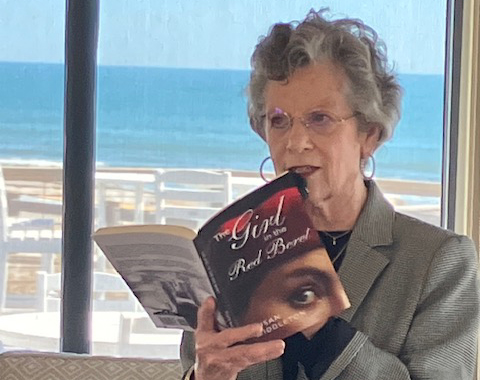
Today, Middleton is the author of three novels — Under the Circumstances (2024), Magdala (2025), and The Girl in the Red Beret (2026). Her novels focus on resilient Southern women navigating overwhelming odds. The inspiration for her first book came when she stood at the grave of a prostitute buried in a rural cemetery in Emanuel County, a place connected to her own family’s long history of reunions.
“I stood by that woman’s grave and decided to write what her story should have been,” she said. “Using my listening skills from the courtroom and the classroom, I heard Millie’s story unfold and wrote it in Under the Circumstances.”
Those same listening skills guide her writing today.
“I think the most important qualities I learned from law school, law practice, and now writing, are perseverance and hard work. I write what I hear from my characters, never knowing where the story will go or especially where it will end. I guess you could say I hear voices.”
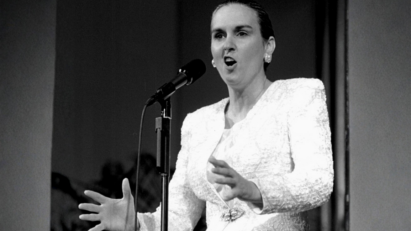
Middleton and her husband Bob moved to Jekyll Island in 2020. She remains active in her church as a pianist and singer, serves on community boards, and continues to write. She is working on a fourth novel.
For law students who feel the pull of creative passions, her life offers reassurance. “A legal education,” she says, “does not narrow a life — it expands it. It sharpens the mind, deepens empathy, and provides tools that translate far beyond the courtroom.”
Looking back across decades of practice, teaching, public service, music, and now writing fiction, Middleton resists defining her own legacy too neatly.
“As far as legacy,” she says, “I would say, let my legacy find me.”
To purchase Susan’s books visit susan-middleton.com.