From health services to health law: Grace Owens student spotlight
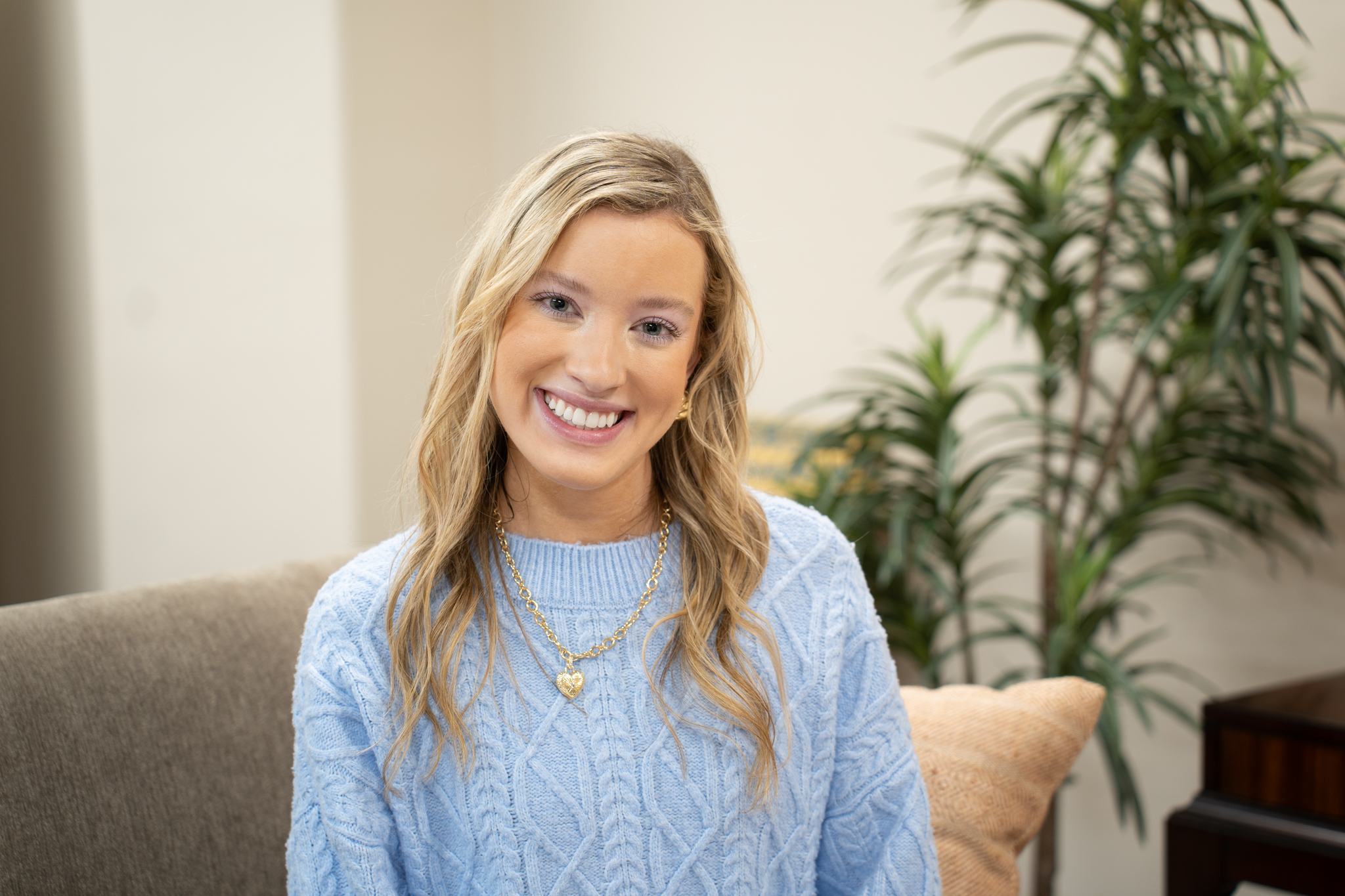
Grace Owens, ’27, came to law school with a deep-rooted passion for healthcare and a clear sense of purpose shaped by both academic study and personal experience. A health services administration major at Clemson University, Grace became fascinated by the powerful role law plays in shaping healthcare systems—an interest further informed by witnessing gaps in long-term care during her grandparents’ battles with Alzheimer’s disease. A first-generation law student, she has already built an impressive résumé that includes internships with Prisma Health and the U.S. District Court for the District of South Carolina, original public health research, service as a CDC student ambassador, and a forthcoming casenote in the Mercer Law Review. Grounded by faith and drawn to Mercer Law’s supportive community, Grace is pursuing a path at the intersection of health, policy, and law with both empathy and ambition.
What initially sparked your interest in law, particularly health law?
When I began my health services administration major at Clemson University, I initially planned to pursue a career in healthcare management. I’ve always been drawn to the complexity of keeping our healthcare system running efficiently. As I progressed in the major, however, I became increasingly aware of the central role law plays in healthcare—and I was fascinated by the intersection of the two fields.
My personal experiences further solidified that interest. Two of my grandparents suffered from Alzheimer’s disease and spent several years in long-term care. During that time, I observed significant gaps in policies and procedures surrounding the treatment of patients with dementia. I often found myself thinking about how better regulations could have improved their quality of care while also reducing liability risks for healthcare providers. Those experiences deeply shaped my desire to pursue healthcare law.
You are a first-generation law student. What has that journey been like for you?
Being a first-generation law student made the decision to attend law school a true leap of faith. I am incredibly blessed to have parents who have been unwavering in their support. They encourage me daily in so many ways, and their belief in me has made all the difference throughout this journey.
Why did you choose Mercer Law, and what has been the best part of your experience so far?
I attended Mercer Law’s admitted students day and immediately felt drawn to the school. I was inspired by the alumni stories and struck by the uniquely supportive, uplifting atmosphere. Since then, that sense of family has truly been my favorite part of the Mercer Law experience.
You’ve completed several internships during your undergraduate and law school journeys. How have those experiences shaped your goals and prepared you for a legal career?
My internship in the legal department at Prisma Health as an undergraduate truly confirmed my decision to pursue law school. It gave me a unique perspective on mitigating risk from a business standpoint while also showing me the meaningful role attorneys play in improving healthcare services.
This past summer, I interned with Judge Sherri Lydon of the United States District Court for the District of South Carolina, which was an invaluable experience. I had the opportunity to conduct legal research and writing and to observe several trials. Judge Lydon is extraordinarily knowledgeable and leads with humility, respect, and grace. She is a model of the kind of leader I hope to become.
Tell us about your health sciences research project through Clemson’s honors program.
My research examined how social determinants of health—such as income level, food availability, and access to healthcare—affect attrition rates in a community diabetes self-management program. I was honored to present my findings at the South Carolina Public Health Association Conference. That project further deepened my interest in public health and health policy.
You also served as a CDC student ambassador. What did that experience involve?
While at Clemson, I volunteered with the Centers for Disease Control and Prevention as a student ambassador. My role was to educate students and recruit participants for the National Health and Nutrition Examination Survey, which collects critical health data from samples across the U.S. population. That experience exposed me firsthand to the challenges and barriers in public health law. Despite that this survey is a primary tool for determining distribution of the country’s financial and healthcare resources, recruiting participants was a challenge.
You wrote a casenote that is being published in the Mercer Law Review. What is the focus of your piece?
My casenote is titled “From Classroom to Courtroom: Vicarious Liability in Clinical Education,” and it will be published in Volume 77 of the Mercer Law Review. I worked closely with Associate Dean of Academic Affairs Pam Wilkins on the piece, and her guidance, encouragement, and insight were invaluable. The casenote analyzes a recent Georgia Supreme Court decision allowing physicians to be held vicariously liable for the actions of their medical students under the doctrine of respondeat superior. My passion for healthcare law drew me to this topic, and I am particularly interested in how this decision may impact physician practice moving forward.
In addition to Mercer Law Review, are you involved in student organizations or leadership roles at Mercer Law?
Yes, I have served as Professor Kaleb Byars’s Contracts I group mentor and will continue in that role for Contracts II in the spring. This experience has been one of the highlights of my semester. Professor Byars has been an incredible mentor, and being able to support 1Ls—using what I’ve learned to help them navigate law school—has been extremely fulfilling.
Outside of law school, what helps you stay grounded and balanced?
My faith is what keeps me grounded above all else. Even during the challenges of law school, I know I’m not relying solely on my own strength. Law school has also given me an incredible group of friends who encourage and uplift me daily. Those relationships mean everything to me.