
Proven Heritage
Founded in 1873, Mercer University School of Law is one of the oldest law schools in the United States and the first one in the state of Georgia accredited by the American Bar Association. Mercer Law is located in Macon, Georgia, about 80 miles south of Atlanta.
The Law School’s current building is on Coleman Hill, a well-known landmark on the Macon skyline. The 90,000-square-foot facility is modeled after Independence Hall in Philadelphia, PA., the location where the Declaration of Independence was debated, adopted and signed.

Award-Winning Curriculum
After a $15 million gift from George W. Woodruff, the Law School initiated an innovative curriculum that reinforced its commitment to small classes and professional skills-oriented approach to legal education. As a result, the Woodruff Curriculum has long been viewed as a model for law schools across America, earning the Gambrell Professionalism Award from the ABA for its “depth and excellence of the Woodruff Curriculum and its commitment to professionalism”, as well as other awards for service and professional skills proficiency.
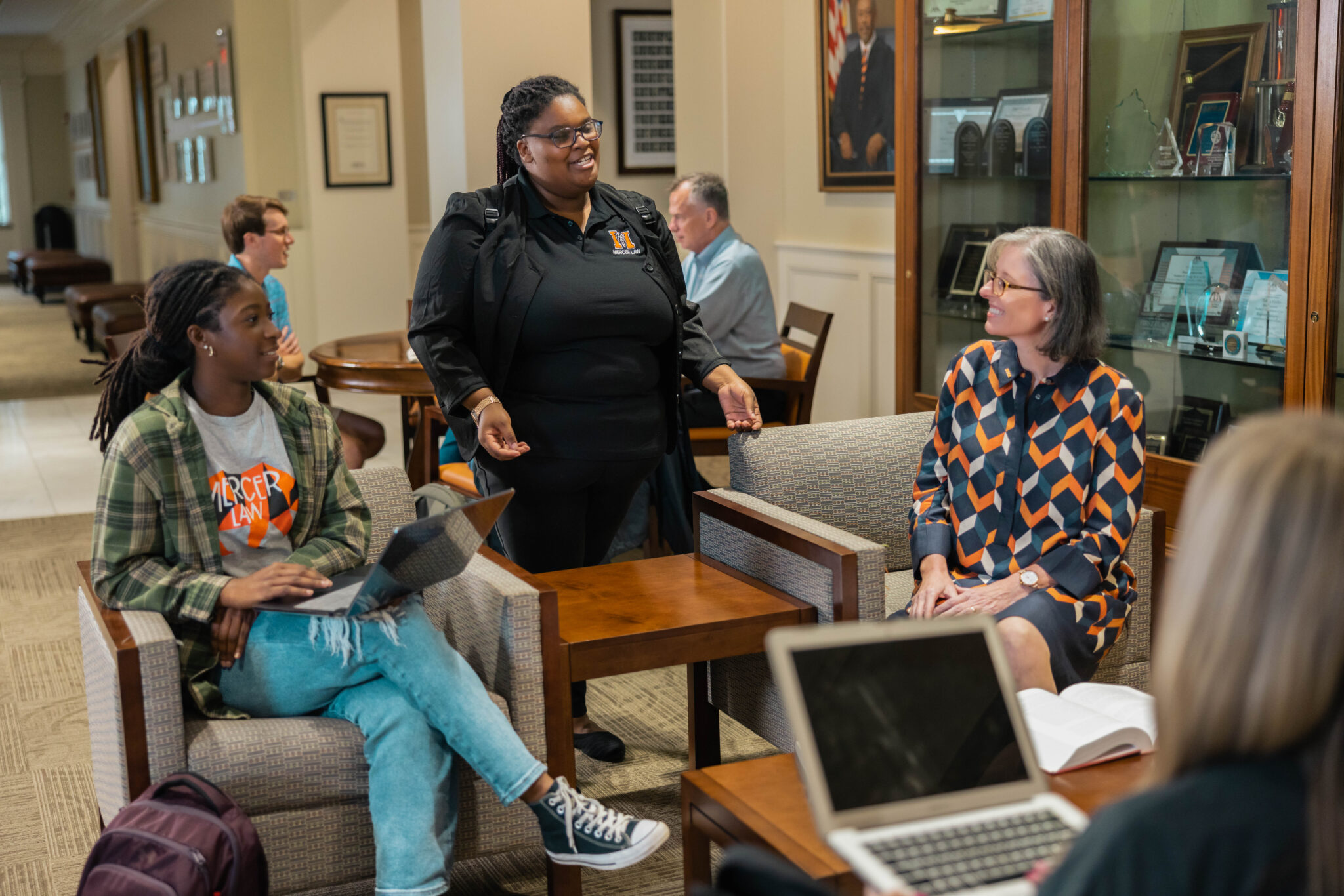
Collaborative Community
Mercer Law School has earned a reputation as an excellent provider of legal education with an intense focus on student and faculty interaction. Its educational philosophy is based on a commitment to ensure that Mercer graduates develop problem-solving, counseling, and trial and appellate advocacy skills, and acquire the legal knowledge to become exceptional practicing attorneys in a supportive and professional environment.

Top-Rated Institution
With an enrollment of about 375 students, Mercer Law School is one of 12 schools and colleges of Mercer University, which has been listed among the top institutions of higher education in the nation. Mercer Law School is home of The Journal of Southern Legal History, and is nationally recognized for its exceptional programs in legal writing, moot court, public service, and professionalism and ethics.